The vault, and the room it lives in
There is a moment in most collections where the watch box stops working. Not because it has failed — because the room has changed around it.
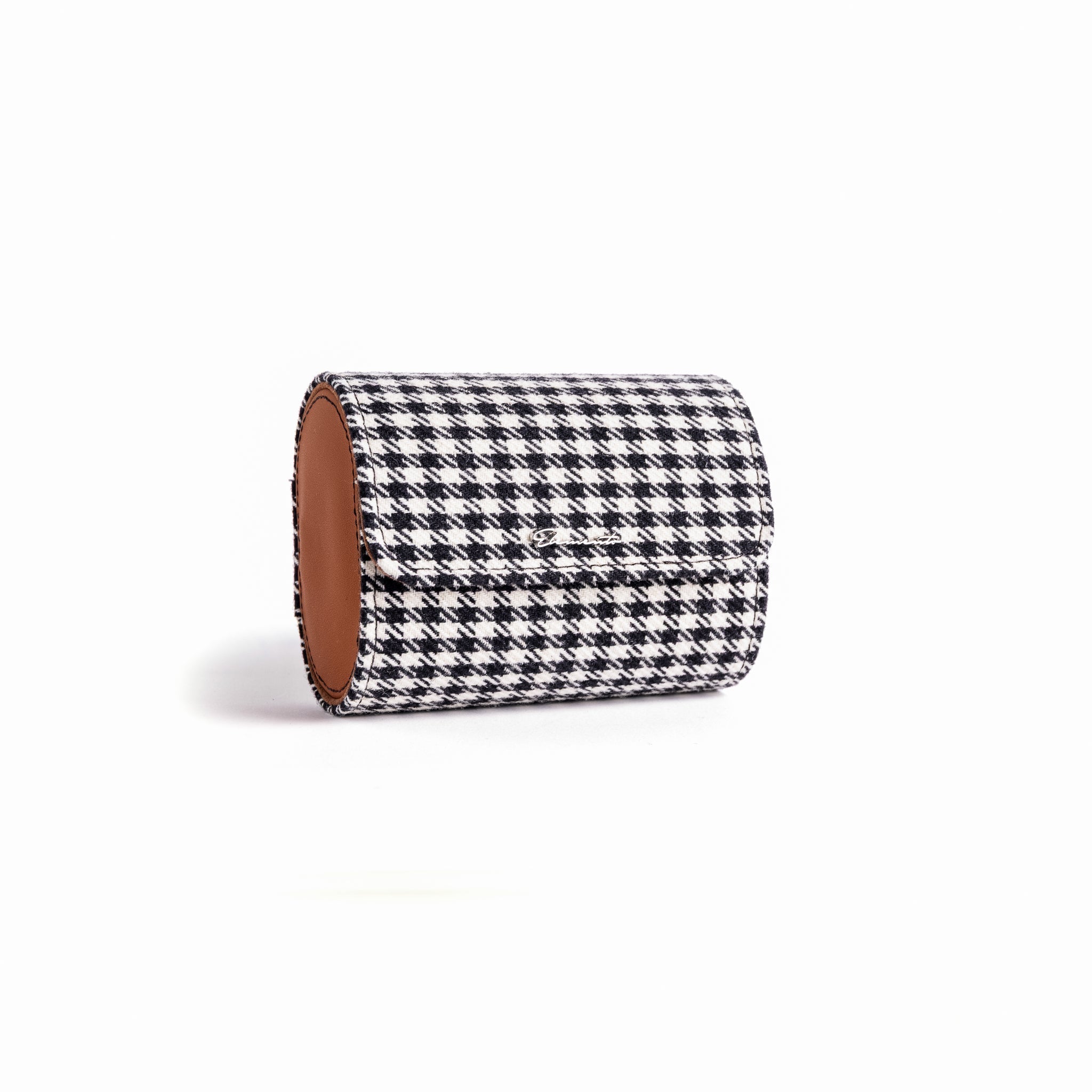
The zip case that was right for three watches and a rented apartment looks wrong on a walnut credenza. The stacked plastic trays that lived in a wardrobe are not something you want to open in front of someone. The collection has become furniture-adjacent, and nothing in the house acknowledges it.
That is the point at which a mahogany vault makes sense, and not really before.
Why mahogany
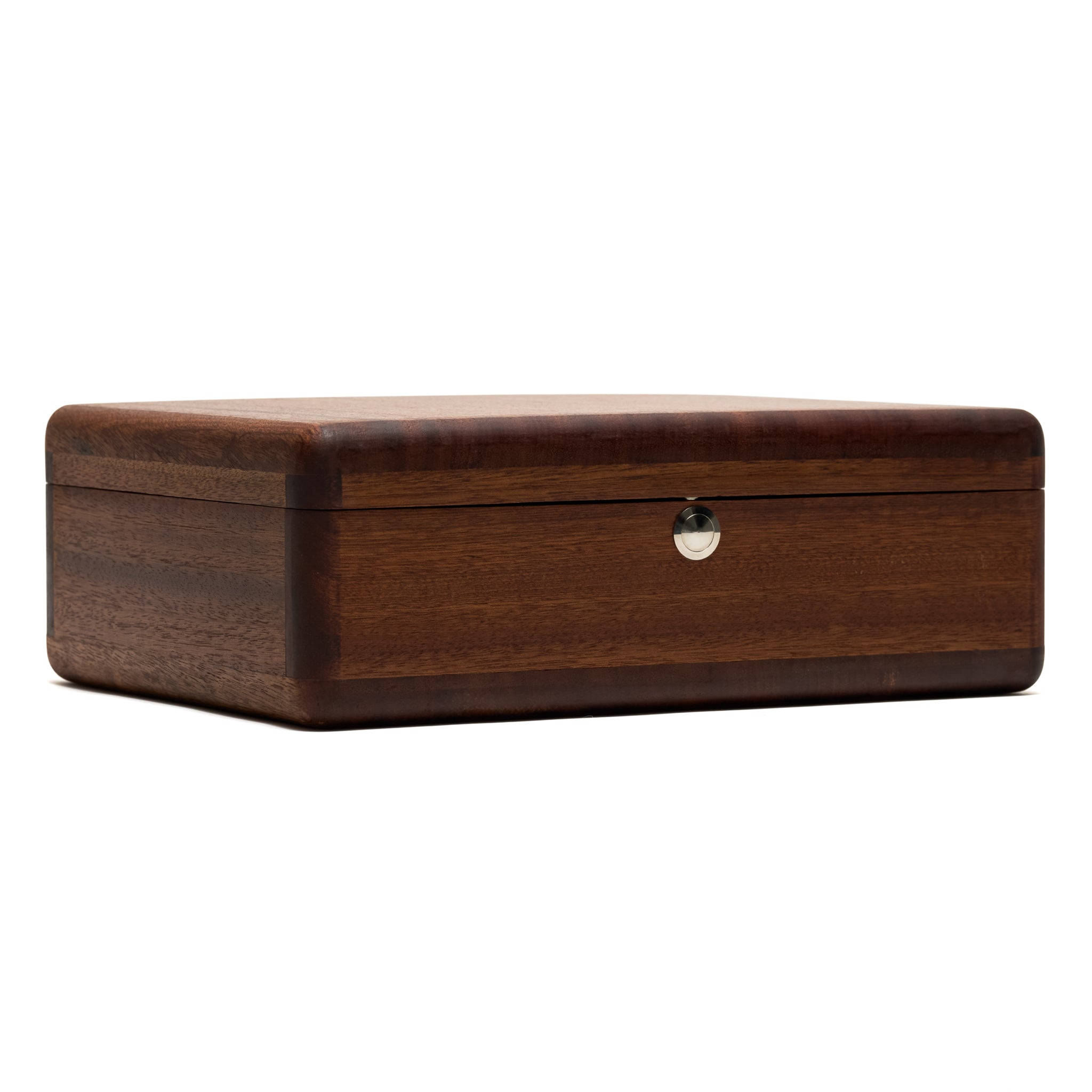
Mahogany is the timber of cabinetmaking rather than the timber of carpentry. It is dense, close-grained and dimensionally stable — which in practice means a lid that closes the same way in a Dubai summer as it does in a London winter, and joints that do not open up over years of being moved from one surface to another.
It also has the quality that matters most in a room: it reads warm without shouting. A polished mahogany box sitting on a dark stone counter or a pale oak console does not announce itself. It looks like it has been there longer than it has, which is close to the highest compliment an object of this kind can be paid.
We finish ours to a low sheen rather than a high gloss. Gloss photographs well and lives badly — it shows every fingerprint, and it makes a piece of furniture look like a product.
What is inside it
The exterior is the part the room sees. The interior is the part that decides whether the object is any good.
Every vault is lined in Alcantara — the microfibre made in Umbria and specified across automotive and aviation interiors for the same three reasons it belongs here. It is matte, so a dial laid against it is the only thing your eye finds. It recovers rather than crushes, so a watch that has occupied the same cushion since spring lifts out without leaving a permanent shadow. And it resists abrasion, light and skin oils — the three things that quietly finish an interior over a decade.
The fittings are cut to the pieces they are meant to hold. A 36 mm dress watch on a leather strap and a 44 mm diver on a steel bracelet do not want the same cushion, and a vault that pretends otherwise is a tray with ambitions.
Hardware is the Maison's own — brushed and polished, in silver or gold depending on what the timber is next to.
Where it belongs in a house
Three places work, and one does not.
The dressing room is the obvious answer and usually the right one. On a counter at chest height, closed, opened once in the morning and once at night. The vault becomes part of a sequence rather than an object you go and fetch.
The study is the second answer, and the more interesting one. A vault on a desk or a low shelf is a collection you look at rather than one you visit. It also puts the watches near where you sit, which is where most people who own several of them actually want them.
The living room works if the house is the kind of house where it works. A closed mahogany box on a console is discreet; the same box open, in front of guests, is a different statement, and you will know within about a second whether you want to be making it.
The safe does not work, and this is the honest part. If a collection lives permanently in a safe, it does not need a vault — it needs a well-fitted tray, and we will happily make one instead. A vault is for a collection that is looked at.
The quiet argument for it
A mahogany vault is not a security object and we will never sell it as one. It will not stop anything. What it does is considerably less dramatic and considerably more useful over ten years: it keeps watches apart from one another, off hard surfaces, out of daylight, and in a place with a name.
The last of those is the one collectors underrate. A collection without a home is a collection that gets left on bathroom shelves and hotel nightstands. The single most common cause of damage we see is not impact — it is a watch that had nowhere obvious to go.
Living with it
Dust the timber with a dry, soft cloth. Twice a year, a wax polish worked in thinly and buffed — nothing silicone-based and nothing sprayed. Keep it out of direct sun, which will lift the colour on one side and not the other. Lift the nap of the Alcantara with a soft brush when it needs it, and nothing else.
Done that way, a mahogany vault outlives most of what is in it. That is the whole idea.